
Blog

In our blog, we regularly publish articles, opinion pieces, good practices and much more on the future of academic education. Would you also like to publish something with us? Then contact us at kommunikation@hochschulforum.org.

Ein Stapel mit Papieren, Magazinen und Zeitungen, erstellt via Midjourney.
Sortieren:
Alphabetisch Z-A
100 Suchergebnisse

Gender & Diversity Reflexivity in Digital Teaching. Thoughts on Ad-Hoc Digitization during the Corona Pandemic

Gender & Diversity Reflexivity in Digital Teaching. Thoughts on Ad-Hoc Digitization during the Corona Pandemic

How can diverse skills, resources, prior knowledge, experiences and needs be taken into account in digital teaching? The design of gender- & diversity-reflecting teaching is a cross-sectional task not only in the corona-conditioned exceptional mode. Together with the Network for Gender and Diversity in Teaching we are realizing a blog series in the new thematic dossier […]

Gestikulierende Hände vor einem Laptop.

Future Skills and University 4.0—are you ready for the change?

Future Skills and University 4.0—are you ready for the change?

Teamwork, Future Skills and new teaching formats - the current university student and "Digital Native", Isabell Fries presents her vision for a university that teaches meaningful skills in the digital era. This article originally appeared in "Synergie - Fachmagazin für Digitalisierung in der Lehre".

Door to a lecture hall

From a Handshake to UniDig: Sweden’s Journey Towards a Shared Digital Infrastructure Collaboration

From a Handshake to UniDig: Sweden’s Journey Towards a Shared Digital Infrastructure Collaboration

Sweden’s universities recently made a breakthrough by joining forces with UniDig, creating a powerful alliance that sets a new standard for higher education collaboration. Sweden’s model is a reminder that and shows how Germany’s universities and the Hochschulforum Digitalisierung community can also make the most of national challenges by working together, taking action, and using digital services together.

Decorative picture with the Text: From a Handshake to UniDig. Sweden’s Journey Towards a Shared Digital Infrastructure Collaboration. A blog article by Mauritz Danielsson.

Fab-Labs and Makerspaces as Digital University Infrastructure – Potentials of Open Workshops for an Open University

Fab-Labs and Makerspaces as Digital University Infrastructure – Potentials of Open Workshops for an Open University

“Digital prototyping and experimentation with hardware offers many potentials for universities: (interdisciplinary) research, (applied) teaching, student projects offer space for further development, cooperation and exchange with civil society and companies as well as cooperation with schools and public institutions that cannot operate such an infrastructure”. In her guest article, Melanie Stilz, from the BMBF-funded research […]

Fab-Lab & Maker-Space.

Experiences and insights into the development of an IT infrastructure for learning and teaching in the university alliance “Unite!”

Experiences and insights into the development of an IT infrastructure for learning and teaching in the university alliance “Unite!”

The university alliance Unite! has been promoting student mobility since 2019 with the creation of various IT platforms. A comprehensive review by Martin Ebner and Sandra Schön (both from Graz University of Technology) provides interesting insights into the current challenges of setting up a shared IT infrastructure for learning and teaching - and also mentions cross-case insights and solutions.

Exchange of practical experience with digital teaching as a prerequisite for sustainability. The Digital Learning Map.

Exchange of practical experience with digital teaching as a prerequisite for sustainability. The Digital Learning Map.

“The aim is to promote the exchange of practical knowledge across university boundaries.” This is a success factor for sustainability. Johannes Moskaliuk, Bianca Diller and Elke Kümmel from the Leibniz Institute for Knowledge Media in Thübingen in the guest article. This article has already been published in: Synergy. Specialist magazine for digitization in teaching #07, […]

Exams in the Pandemic: Online Proctoring Is No Solution

Exams in the Pandemic: Online Proctoring Is No Solution

Students at German universities are in the middle of the third examination phase during the pandemic – and many universities are still ill-prepared for it. In the following, Leonie Ackermann explains why online proctoring is (still) not a good idea and at the same time gives an insight into the technical functioning of common service […]
One does not know what to do.

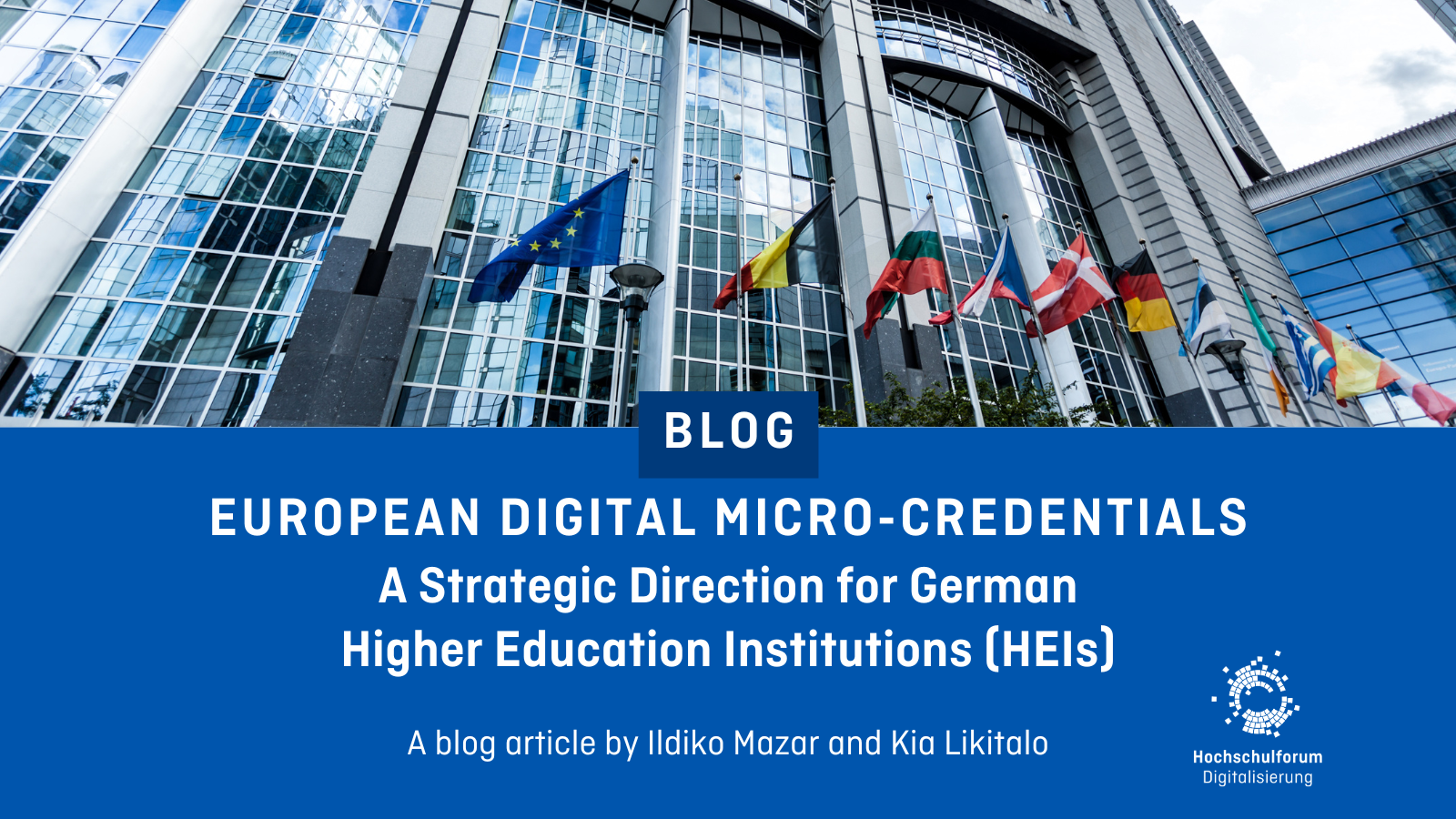
European Digital Micro-Credentials – A Strategic Direction for German Higher Educational Institutions

European Digital Micro-Credentials – A Strategic Direction for German Higher Educational Institutions

Digital credentials in general, and micro-credentials more narrowly, are increasingly vital, trusted tools for higher education institutions as they adapt to the demands of life-long learners and the evolving labour market. Their implementation is proving to be advantageous in learning recognition, student mobility, employability, and institutional efficiency. To understand the terminology and state of play at a European level, and how European Digital Credentials for Learning (EDC) can provide a framework for enhancing educational offerings for German Higher Education Institutions (HEIs), we contacted Ildiko Mazar and Kia Likitalo from the European Learning Model (ELM) Support team.

EU interventions in higher education – Higher impact with a lighter touch?

EU interventions in higher education – Higher impact with a lighter touch?

On 16 July 2025, the European Commission published its proposal for the Erasmus+ regulation 2028–2034. In this article, Peter van der Hijden reflects on how the programme could achieve higher impact with a lighter touch. He discusses key dossiers such as European Universities, european degree labels, and micro-credentials, and outlines pragmatic ways to strengthen effectiveness, innovation, and interoperability in higher education across Europe.

Yellow background with a globe, stacked coins topped by a graduation cap, books, and hands holding EU flags. Blue banner reads: “Blog – EU Interventions in Higher Education. Higher impact with a lighter touch? By Peter van der Hijden. Hochschulforum Digitalisierung logo.

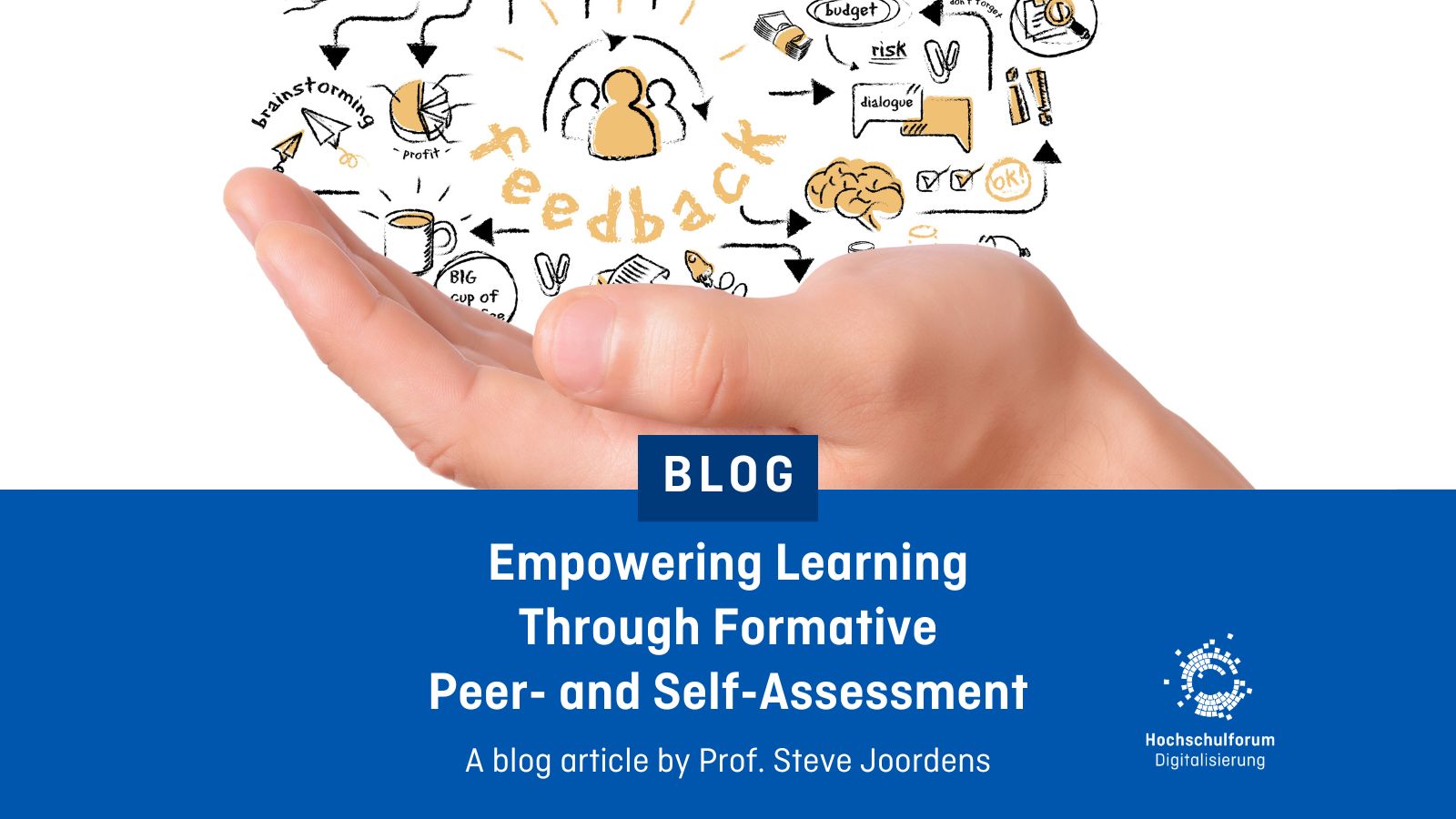
Empowering Learning Through Formative Peer- and Self-Assessment

Empowering Learning Through Formative Peer- and Self-Assessment

A common problem in traditional education is that students are passive recipients of feedback. Prof. Steve Joordens explains in this blog article how peer- and self-assessment can make students active participants in the evaluation process. This can turn assessments into an opportunity for reflection and skill development. It also helps students to develop critical thinking and self-awareness, ultimately leading to more meaningful learning.

Pagination Right
1
...
4
5
6
7
8
...
10
Pagination Right